
Welcome to the first research spotlight drop for 2024. Yes, I know, it’s February, and these emails usually go out on the first of each month, but I enjoyed a lazy start to the year and there was no way I was writing up an email on the first of January. I attempted to keep away from the workstation and enjoy time off and I hope you did too.
In December I shared a research paper looking at pelvic floor activity during exposure to emotion-inducing film excerpts in women with and without vaginismus. I love this paper because it helps me sell the importance of stress, anxiety and history of trauma to all my clients who don’t understand their pelvic floor symptoms are exacerbating during these times and flare ups are not actually a result of the exercises they are doing. I tell them about this paper and suddenly ‘stress management’, ‘meditation’ and ‘yin yoga’ move up on the priority list. Winning!!
If you missed this email I shared the content on the podcast so you can head over to the show and listen to Episode 34 – Does the pelvic floor respond to emotion?
Enough about emotion… let’s talk about the hip… AGAIN. But this time from a different perspective.
I have shared a few papers covering the importance of the hip and they have all been in relation to improving symptoms of urinary incontinence. But what about those women who suffer with symptoms of urgency and frequency? Should we be looking at pelvic floor muscle interventions, or can we also consider the hip?
The purpose of this study was to compare hip and pelvic floor muscle strength between women with and without urgency and frequency. Many interventions are looking at reducing symptoms of urinary incontinence but rarely report associations with urgency and frequency. Many women will seek medical interventions to aid in symptom management which can range from pharmacological management to nerve stimulation, botox injections and in some cases surgeries, alongside tracking fluid intake and voiding diaries. These medical treatments often only result in partial relief for women. The goal of the research was to determine whether a musculoskeletal assessment could help us identify other driving factors that we could address with a corrective exercise program.
Many research papers have suggested that hip muscle performance is an important factor in many pelvic floor disorders. This is because the Obturator Internus attaches to the pelvic floor through fascial connections and sufficient tension in this deep hip rotator muscle will support force generation in the pelvic floor muscle. Research has previously found weakness in both the hip external rotators and abductors among those with stress urinary incontinence versus asymptomatic women however no one has looked at whether this is the same for symptoms of urgency and frequency.
The study details:
-
- 42 women were recruited for the study: 21 symptomatic women and 21 controls.
-
- The symptomatic women were matched 1:1 to controls based on age, BMI and vaginal parity.
-
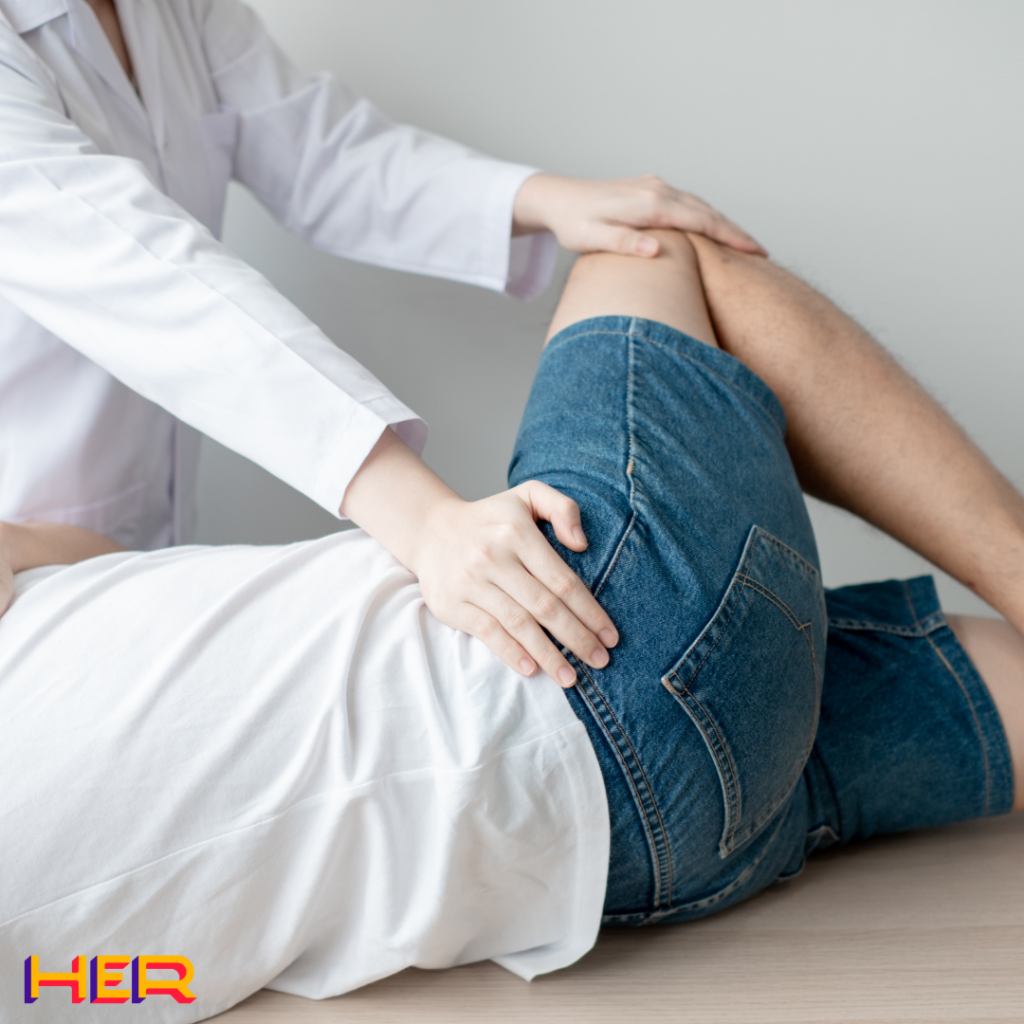
- Hip muscle strength was measured using a hand held dynamometer by assessing 3 max effort 3 second trials for each position, averaging out the 3 measures for the final score.
-
- Hip external rotation force was measured in sitting at 90 degrees flexion and neutral hip rotation.
-
- Hip abduction strength was measured in side-lying with pillows supporting the test leg (top leg) with the hip in neutral abduction, rotation and flexion/extension.
-
- Hip muscle strength was measured using a hand held dynamometer by assessing 3 max effort 3 second trials for each position, averaging out the 3 measures for the final score.
- Pelvic floor muscle strength and endurance was also assessed via measuring peak pressure, duration of contraction and average pressure over the trial using manometer.
Keep in mind this paper only looked at the assessment, and did not look at whether a hip strengthening program would resolve or improve symptoms.
What did they find?
2 observations came out of this study:
-
- Symptomatic women had significantly less hip external rotation strength and hip abduction strength compared to controls.
-
- There were no statistical differences in pelvic floor muscle strength or endurance when comparing the 2 groups of women.
So… what can we take away from this paper?
-
- Women with urinary urgency and frequency do not seem to have pelvic floor weakness. The study did however suggest that perhaps the parameters they were measuring may not be significant for these symptoms and looking more at the ability of the pelvic floors to move through full range of motion may tell us more. There is a tendency for women with symptoms of urgency and frequency to have a hard time relaxing the pelvic floor which I guess could come from repeated over recruitment in response to urges that they worry they don’t have control over. They also suggested that pelvic floor response to the demand of daily activities and exercise versus voluntary contractions may also be a better parameter to assess.
-
- Assessing hip strength in particular, external rotation and abduction, may be more important to look at in women with urgency and frequency versus pelvic floor strength. If we then consider the impact that weakness in these tissues has across the pelvis and other muscles we may see overactive/tight adductors and internal rotators. This would impact how the pelvis finds stability in movement as well as motor control patterns in functional activities and programming exercises to create harmony between muscles and optimise pelvic stability could also be beneficial for this population.
-
- Musculoskeletal assessment is important to incorporate in your initial consultation with women who experience urgency and frequency. I think when someone comes in and starts chatting about urinary problems we immediately think of pelvic floor dysfunction. This could in fact be a problem, however, as movement-based practitioners we need to remember the role that the rest of the body plays in pelvic health. If we assess more than the pelvic floor we can provide programming that targets areas that may provide faster relief of symptoms for our clients.
-
- It is also nice to see that exercise programming may in fact be better than medical management for this population. I have had many women in the virtual clinic with symptoms of urgency and frequency, some with OAB diagnosis, have minimal relief until going down the movement based approach and addressing muscular balance around the pelvis and deeper core system. Remember we can do alot for these women and help them live a better quality of life.
-
- This is also helpful information to know if you find yourself in a situation with a women who has urgency or frequency issues and you have no idea how to address the pelvic floor because you have only just started your journey into women’s health. Assess the hip and prescribe for that.
So there you have it. The hip and how weakness in external rotation and abduction may be a problem for women who experience urgency and frequency symptoms. Another reason why I harp on about the importance of hip function for pelvic health clients… and everyone really.
If you’d like to learn more about pelvic floor and how to actually rehab beyond contraction and relaxation, I have big plans in the works for the year so keep your eyes on my socials and your inbox for updates throughout the year.
Have a fabulous month and I’ll catch you in the next one!